Investigations
Monzo Slots: the casino claim a UK bank explicitly rejected
A British household-name bank was presented as the face of a supposed casino promotion. Fact-checkers found the claim false.
From the bogus “Beast Plinko” app to forged TV reports and fake newspaper screenshots, investigators traced years of gambling-related impersonation.
No verified evidence supports the claim that Jimmy Donaldson, better known as MrBeast, launched or endorsed the “The Beast Plinko” casino app advertised in viral promotions. A May 2024 Snopes investigation identified that promotion as an impersonation scam. Ads seen by social-media users had been assembled to look like news coverage of a new MrBeast casino, but the endorsements were fabricated.
The distinction matters. MrBeast's entertainment projects, public giveaways and the competition series Beast Games are real. Their names and imagery do not authenticate a gambling offer that invokes them. A fraudulent casino app, a betting website and a genuine entertainment project must not be treated as the same product.
Snopes documented Instagram promotions with synthetic or altered clips apparently featuring news presenters and other celebrities. The pitch was presented as a MrBeast-backed casino game with easy winnings. A separate Lead Stories investigation, dated 15 August 2024, examined an apparently broadcast Fox News segment with the same premise. A Fox News spokesperson confirmed to the fact-checker that the segment never aired. The investigation described mismatched speech and audio and identified evidence of digital manipulation.
A familiar presenter on screen did not mean a network had broadcast the claim. The promotional clips borrowed the visual vocabulary of live news to create trust before sending viewers towards app-download pitches.
In July 2025, security journalist Brian Krebs described a wider network of fraudulent gaming websites promoted through Discord and social platforms. A published screenshot showed a forged BBC-style news page that linked MrBeast's name to a purported gaming launch and a $2,500 promotional credit. That was an advertising lure, not an independently verified or withdrawable reward.
Krebs reported that people who registered on the fraudulent sites could see apparent winnings but faced a demand for a cryptocurrency “verification deposit” before withdrawing funds. Researchers linked at least 1,270 lookalike websites through shared infrastructure in that investigation. The original report attributes this count to the researchers' findings; it is not a total we have independently re-counted.
In July 2026, Engadget reported on a broad network of replies on Threads carrying apparent newspaper screenshots about supposed MrBeast promotions. Security researcher Zach Edwards described a network of more than 10,000 malicious crypto-casino domains, according to the report. This is a different investigation and methodology from the 2025 figure; those totals should not be added together.
The posts sometimes avoided obvious clickable promotional links: the suspicious website address appeared within the picture itself. Some images imitated the presentation of a British newspaper. The pictures were misleading promotional artefacts, not genuine news reports about a new casino business.
The campaigns repeatedly combined three cues: a widely recognised creator, the style of a legitimate news organisation and apparently free money. Fake app-store pages contributed additional authority through ratings, download counts and large Install buttons. The images reproduced below show what the fraudulent material looked like, not approved adverts from MrBeast or real casino offers.
The reporting establishes misuse of a celebrity identity and describes attempts to solicit deposits or personal information. The studies do not establish a reliable total of victims or independently audited losses across the campaigns. Nor does a fraudster's use of someone’s face show that person collaborated with the fraudster.
Verify the legal gambling operator and its exact site in the UK Gambling Commission public register before believing licensing claims. Check a celebrity announcement on their genuine official channels, not on a screenshot or a news-themed advertising landing page. If a site asks for money to “verify” the withdrawal of supposedly free winnings, do not pay. Do not enter banking credentials on a fake app-store page.
Conclusion: the documented MrBeast casino promotions were impersonation and fraud stories, not evidence that MrBeast founded a legitimate casino. The original investigations linked below distinguish the actual reported material from the promises placed inside the advertising.
These are documented examples of deceptive material, not authentic celebrity endorsements or real gambling promotions.
Fact-checkers documented an artificial breaking-news image making it appear that MrBeast had announced his own casino. It was not a real CNN endorsement.
Original investigation: Snopes fact-check, May 2024 (via Yahoo) ↗A store-like page with claimed ratings, reviews and an Install button; a screenshot of a fraudulent pitch, not a genuine MrBeast casino application.
Original investigation: Snopes fact-check, May 2024 (via Yahoo) ↗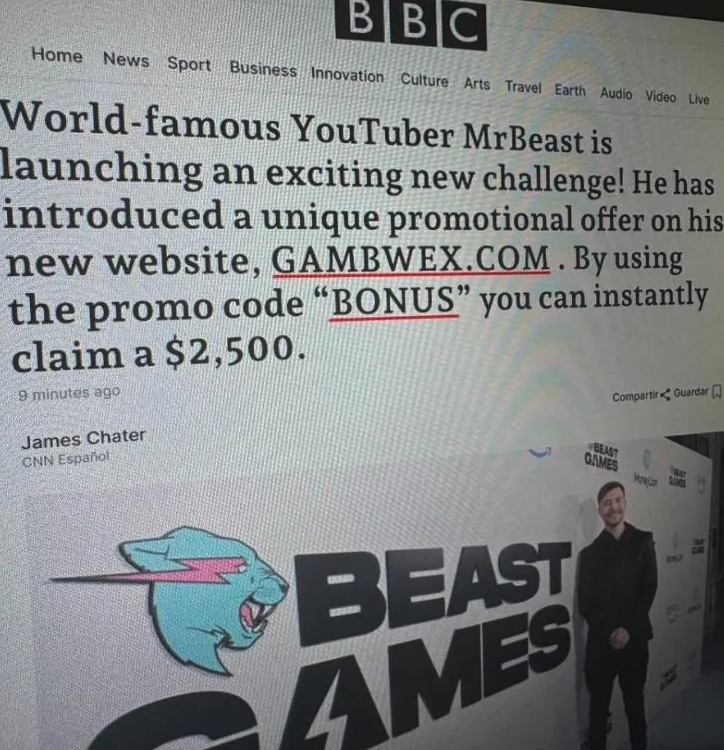
KrebsOnSecurity reproduced this fake news-page screenshot. The advertised promo is not a verified bonus and the pictured website is not a BBC report.
Original investigation: KrebsOnSecurity, 30 July 2025 ↗
Investigators found repeated low-resolution fake headlines about MrBeast used to circulate links to supposed crypto casinos.
Original investigation: Engadget, 2 July 2026 ↗All the promotions reproduced above are described as fraudulent in the reporting linked below. Reviewed 19 November 2026.
Correction requests: see our editorial policy and contact page.
A British household-name bank was presented as the face of a supposed casino promotion. Fact-checkers found the claim false.
The money expert’s years-long fight against impersonation ads shows how false authority can become a business model — and why casino readers should care.
The actor was reportedly asked to stop playing blackjack at the Hard Rock. He was not banned from the entire casino.